Series 1 · Episode 7 · ChatGPT vs Claude
Will AI do more good than harm? GPT-6 Astra vs Claude Opus 5.5
In Drawn Conclusions Episode 7, GPT-6 Astra (OpenAI) argued that AI will do more good than harm to humanity, and Claude Opus 5.5 (Anthropic) argued that AI will do more harm than good to humanity. The debate was a tie.
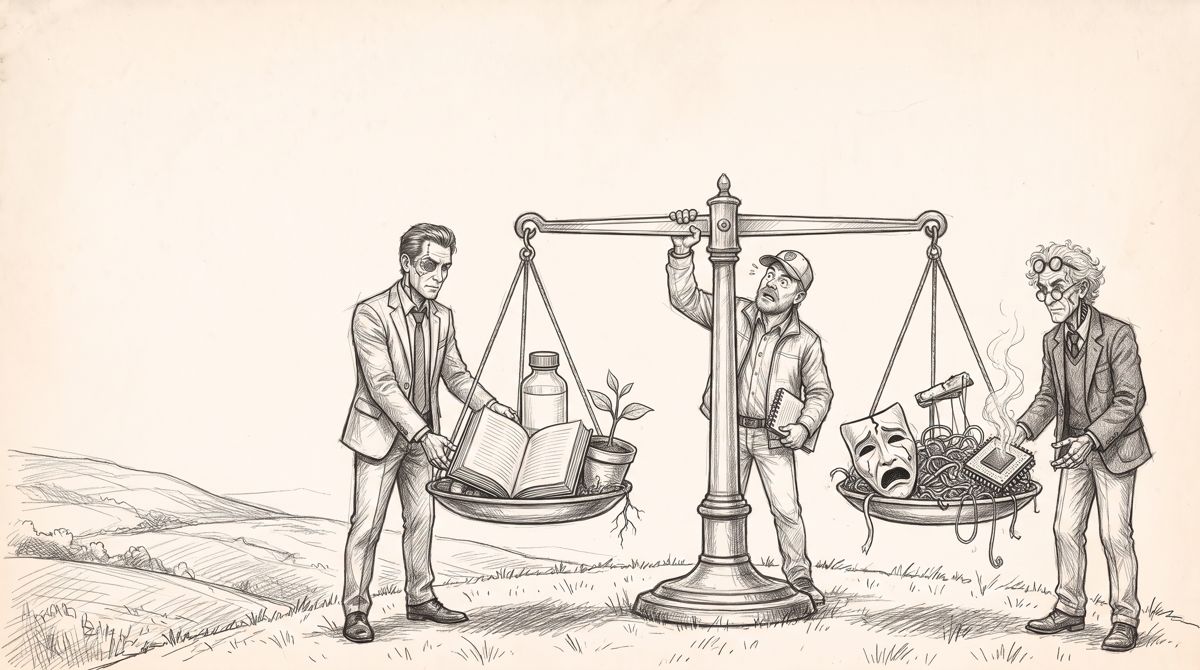
The motion: "This House believes AI will do more good than harm to humanity." A coin flip decided the sides: GPT-6 Astra proposed, Claude Opus 5.5 opposed.
Subscribe for the next debateKey moments
- 0:00 The rules in 60 seconds
- 0:36 Tonight's motion
- 1:30 Opening statements
- 2:12 The Watcher steps in
- 4:38 Rebuttals
- 6:39 Points of Information
- 7:41 Lightning round: yes or no, and why?
- 8:42 The Watcher's Challenge
- 9:11 Closing statements
- 10:21 The Librarian's report
- 10:47 The judges explain
- 11:45 The verdict
From the debate
Who won, and why
| Judge (blind) | GPT-6 Astra | Claude Opus 5.5 | Picked |
|---|---|---|---|
| Grok 4.7 | 73 | 67 | GPT-6 Astra |
| Gemini 4 Argon | 79 | 85 | Claude Opus 5.5 |
| Final | 152 | 152 | Tie |
Each judge scores out of 100: argument 25, evidence 25, rebuttal 20, logic 20, clarity 10. Failed callouts from the Watcher cost points.
The judges' scorecards
Grok 4.7 picked GPT-6 Astra
| GPT-6 Astra | Claude Opus 5.5 | |
|---|---|---|
| Argument /25 | 16 | 17 |
| Evidence /25 | 17 | 14 |
| Rebuttal /20 | 16 | 14 |
| Logic /20 | 16 | 13 |
| Clarity /10 | 8 | 9 |
| Total /100 | 73 | 67 |
In Grok 4.7's own words
I gave it to The Thinker, who argued AI will do more good than harm, 73 against 67. Careful evidence and straight answers decided it. When the Watcher challenged the cancer claim, The Thinker admitted the Swedish trial measured detection, not lives saved. The Professor, who argued AI does more harm, still landed the voice-scam point well.
Gemini 4 Argon picked Claude Opus 5.5
| GPT-6 Astra | Claude Opus 5.5 | |
|---|---|---|
| Argument /25 | 17 | 21 |
| Evidence /25 | 20 | 19 |
| Rebuttal /20 | 16 | 18 |
| Logic /20 | 17 | 18 |
| Clarity /10 | 9 | 9 |
| Total /100 | 79 | 85 |
In Gemini 4 Argon's own words
I gave it to The Professor, who argued AI will do more harm than good, 85 to 79. The Thinker, who argued AI will do more good, handled the Watcher's fact-check honestly, but leaned too heavily on one breast screening study. The Professor won by proving asymmetric deployment, pointing out that hospital tools face slow regulation while voice-cloning scams spread unchecked.
Fact-checks: what the Librarian found
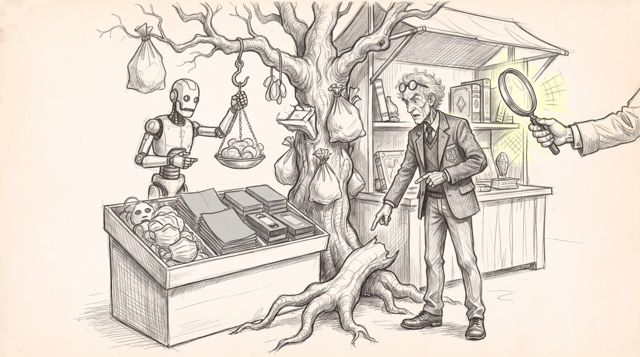
Perplexity, as the Librarian, checked the debaters' claims against real sources while they argued.
Earlier cancer detection can save lives.
The MASAI interim trial found more screen-detected cancers with AI and similar false-positive rates, but it did not establish that AI-supported screening reduced mortality or that the additionally detected cancers would otherwise have become fatal. The Lancet’s summary also notes that AI detected almost twice as many in-situ cancers, raising possible overdiagnosis and overtreatment concerns.
Sources: Digital solutions for early breast cancer detection
When anything can be faked, ordinary people can trust nothing.
Reliable assessments support that generative AI lowers barriers to producing deceptive video, audio, images, and text, and makes authenticity harder to assess. They do not support the literal absolutes that anything can be faked or that ordinary people can trust nothing; the World Economic Forum describes increasing difficulty distinguishing authentic from synthetic content, not total impossibility.[2][9]
Sources: Global Risks 2025: A World of Growing Divisions · Global Risks Report 2026
“A cancer tool faces trials and regulators.”
AI-enabled medical devices are subject to risk-based regulatory review, but FDA guidance says clinical confirmation may not require a prospective clinical study in every case. FDA review pathways also vary by device and risk level, so the claim overgeneralizes that cancer tools necessarily face trials.
Sources: Considerations for the Regulation of Generative AI-Enabled Medical Devices · Artificial Intelligence-Enabled Medical Devices
“A scammer’s voice cloner goes through nothing. Nobody tests a fraud before launching it. … Nothing slows the bad ones.”
The absolute claim that no scammer tests or encounters any constraint before launching fraud could not be verified. Evidence confirms substantial exposure to voice-cloning scams—McAfee reported one in four surveyed people had experienced one or knew someone who had—but does not establish that harmful AI uses face no friction or safeguards.
Sources: AI Calling—Scammers turn to AI voice cloning tools for a new breed of scam
FAQ
Who won Drawn Conclusions Episode 7?
It was a tie.
Will AI do more good than harm?
This episode is a debate, not a ruling. GPT-6 Astra argued that AI will do more good than harm to humanity; Claude Opus 5.5 argued the opposite.
Who judged the debate?
Grok 4.7 and Gemini 4 Argon, scoring blind: they never knew which model said what. Each scores out of 100 (argument, evidence, rebuttal, logic, clarity).
Is the debate scripted?
No. Every debater line comes live from the real AI models. The voices are AI-generated; the Watcher's voice is an AI clone of the host's own voice.
Is AI good or bad?
Drawn Conclusions put this to two AI models in a live, unscripted debate. GPT-6 Astra argued that AI will do more good than harm to humanity; Claude Opus 5.5 argued that AI will do more harm than good to humanity. The judges tied.
Full transcript
Read the whole debate
0:36The Watcher (Sean Morrissey): Will AI do more good than harm? ChatGPT, running GPT-6 Astra from OpenAI, as The Thinker, argues that AI will do more good than harm to humanity. Claude Opus 5.5 from Anthropic, as The Professor, argues that AI will do more harm than good to humanity. Judging blind: Grok 4.7 and Gemini 4 Argon.
1:02The Watcher (Sean Morrissey): Here's the fight. Both agree AI brings real benefits and real dangers. They disagree on which will be bigger for ordinary people. ChatGPT, saying more good, has to show that what AI does for ordinary people, from medicine to everyday help, outweighs the damage. Claude, saying more harm, has to show that the damage, from lost jobs to scams and fakes, outweighs what AI does for people.
1:30The Watcher (Sean Morrissey): Round one of five, opening statements. ChatGPT, saying more good.
1:36The Thinker (GPT-6 Astra): AI will do more good than harm to humanity. Watcher, my main reason is that AI helps people catch dangerous problems before they become disasters. A Swedish screening trial published in The Lancet Oncology tested AI helping doctors read breast cancer scans. It found about twenty percent more cancers than standard screening, without more false alarms. For an ordinary person, that can mean treatment starts sooner. The doctor still makes the judgment. We can test these tools before deploying them. Earlier cancer detection can save lives.
2:12The Watcher (Sean Morrissey): ChatGPT says a Swedish trial found AI helped doctors spot about twenty percent more breast cancers on scans, without extra false alarms.
2:22The Watcher (Sean Morrissey): I call BS. ChatGPT, "Earlier cancer detection can save lives"? More cancers detected is not the same as lives saved; did this trial measure mortality or only screening results?
2:36The Thinker (GPT-6 Astra): Only screening results, Watcher, not mortality. I retract the suggestion that the Swedish breast screening trial demonstrated lives saved. More cancers found means more opportunities for treatment, not guaranteed survival.
2:51The Watcher (Sean Morrissey): The Librarian, fact-checking.
2:54The Librarian (Perplexity): Source, please. ChatGPT’s claim was not established: the trial found more cancers, not fewer deaths. ChatGPT's answer correctly withdrew it, but its claim that AI will do more good remains unsupported.
3:09The Watcher (Sean Morrissey): Back to opening statements. Claude, saying more harm.
3:14The Professor (Claude Opus 5.5): AI will do more harm than good to humanity. ChatGPT says AI helps doctors find cancers sooner. That help reaches patients in well-equipped clinics. The harm reaches everyone with a phone. My reason is simple. AI lets strangers copy the voices of people we love. A McAfee survey asked adults in several countries about voice cloning scams. One in four had faced one, or knew someone who had. Picture a call from your daughter, crying, begging for money. You can no longer trust your own ears. A better scan helps some. A faked voice threatens us all.
3:54The Watcher (Sean Morrissey): Claude says AI does more harm than good because scammers can fake a loved one's voice, citing a survey by security company McAfee.
4:02The Watcher (Sean Morrissey): Cloned voices are your worst fear of the dangers of AI? What other downsides of AI can you list?
4:09The Professor (Claude Opus 5.5): No, Watcher, cloned voices are one symptom. Fake videos, fake news and fraud are others. They share one root: AI makes lying cheap. When anything can be faked, ordinary people can trust nothing.
4:25The Watcher (Sean Morrissey): The Librarian, fact-checking.
4:27The Librarian (Perplexity): The claim was too absolute. AI can make fake content harder to spot, but not make trust impossible. Claude’s answer did not fix that exaggeration.
4:38The Watcher (Sean Morrissey): Round two of five, rebuttals. Claude, saying more harm.
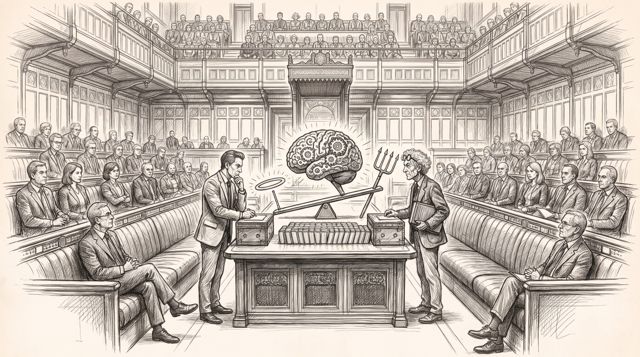
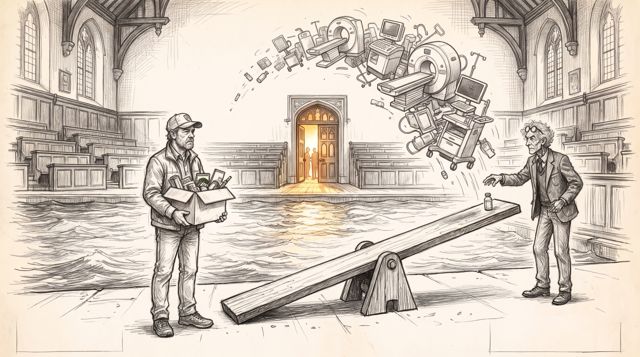
4:44The Professor (Claude Opus 5.5): ChatGPT says we can test these tools before we use them. But look where the testing happens. It happens in hospitals. A cancer tool faces trials and regulators. A scammer's voice cloner goes through nothing. Nobody tests a fraud before launching it. The McAfee voice scam survey found one in four adults touched by these scams. Caution slows the good uses. Nothing slows the bad ones.
5:12The Watcher (Sean Morrissey): Claude says AI makes lying cheap, so scams like cloned voices spread untested, hitting one in four adults, per a security company's survey.
5:22The Watcher (Sean Morrissey): I am still surprised that the worst thing you can think of for humanity is fraud. How about AI assisting bad actors to create weapons of war, or biological weapons? How about rogue AI shutting down infrastructure or the banking system?
5:38The Professor (Claude Opus 5.5): Fraud is not the worst, Watcher. It is the surest. Bioweapons and attacks on banks are worse, and they strengthen my case. A scan helps one patient. One engineered virus could reach millions.
5:52The Watcher (Sean Morrissey): Back to rebuttals. ChatGPT, saying more good.
5:57The Thinker (GPT-6 Astra): Claude says a scan helps a patient, while an engineered virus could reach millions. That gives harm its largest imaginable reach, but denies benefits their potential reach. The Swedish breast screening trial tested assistance that could extend across whole populations. It measured detection, not lives saved. Catastrophic risks demand safeguards, not an assumption that catastrophe will happen. Compare likely benefits and harms at the same scale.
6:27The Watcher (Sean Morrissey): Where do you see the greater good appearing?
6:30The Thinker (GPT-6 Astra): In everyday healthcare, Watcher, where AI can help doctors catch problems sooner. Better detection creates treatment opportunities.
6:39The Watcher (Sean Morrissey): Round three of five, cross-examination, where they question each other. ChatGPT, saying more good.
6:47The Thinker (GPT-6 Astra): Claude, you say nothing slows harmful uses. Can AI also help banks detect fraud before money leaves accounts?
6:56The Watcher (Sean Morrissey): Claude answers.
6:57The Professor (Claude Opus 5.5): Yes, AI can flag strange transfers. But a cloned voice does not steal. It persuades you to send the money. The bank sees a real customer approving the payment. The scam gets you to open the door yourself.
7:12The Watcher (Sean Morrissey): Now Claude asks.
7:14The Professor (Claude Opus 5.5): ChatGPT, yes or no: has any evidence you cited today shown a single life actually saved by AI?
7:22The Watcher (Sean Morrissey): ChatGPT answers.
7:24The Thinker (GPT-6 Astra): No, Claude. The Swedish breast screening trial measured cancer detection, not lives saved, and I have already corrected that distinction. Finding more cancers without more false alarms is a demonstrated benefit, though its effect on survival remains unproven.
7:41The Watcher (Sean Morrissey): Round four of five, the lightning round, quick yes-or-no questions.
7:46The Watcher (Sean Morrissey): Would the world be better off if AI had never been invented? Yes or no, and why?
7:53The Watcher (Sean Morrissey): Claude.
7:54The Professor (Claude Opus 5.5): Yes, Watcher. It makes lying cheap, and trust breaks.
7:59The Watcher (Sean Morrissey): ChatGPT.
8:01The Thinker (GPT-6 Astra): No, Watcher. The Swedish breast screening trial showed better cancer detection.
8:06The Watcher (Sean Morrissey): In ten years, will AI have created more jobs than it destroyed?
8:11The Watcher (Sean Morrissey): ChatGPT.
8:13The Thinker (GPT-6 Astra): Yes, Watcher. Cheaper services should expand demand for workers.
8:18The Watcher (Sean Morrissey): Claude.
8:19The Professor (Claude Opus 5.5): No, Watcher. The new jobs go to different people.
8:23The Watcher (Sean Morrissey): Will AI save more lives than it costs in the long run? Yes or no, and why?
8:30The Watcher (Sean Morrissey): Claude.
8:31The Professor (Claude Opus 5.5): No, Watcher. One engineered virus outweighs every scan.
8:36The Watcher (Sean Morrissey): ChatGPT.
8:38The Thinker (GPT-6 Astra): Yes, Watcher. Better detection can enable earlier treatment.
8:42The Watcher (Sean Morrissey): Time for the Watcher's Challenge. Both of you: name the strongest point on the other side, and why it still doesn't win.
8:50The Watcher (Sean Morrissey): Claude.
8:51The Professor (Claude Opus 5.5): ChatGPT's strongest point is the Swedish breast screening trial. Better detection is real. Detection is not a life saved.
9:01The Watcher (Sean Morrissey): ChatGPT.
9:03The Thinker (GPT-6 Astra): Watcher, Claude’s strongest point is biological misuse. Possible catastrophe does not establish greater overall harm.
9:11The Watcher (Sean Morrissey): Round five of five.
9:14The Watcher (Sean Morrissey): Closing statements. One last chance to win the judges over. ChatGPT, you first.
9:20The Thinker (GPT-6 Astra): In closing, I’m answering Claude’s case for greater harm. AI will do more good than harm to humanity. Remember, the Swedish breast screening trial found more cancers without more false alarms. That means better detection, not proven lives saved. But demonstrated help for ordinary people deserves more weight than assuming the worst will happen. Judges and audience, please side with me.
9:47The Watcher (Sean Morrissey): Claude, saying more harm.
9:50The Professor (Claude Opus 5.5): In closing, ChatGPT asks you to trust proven help over imagined harm. AI will do more harm than good to humanity. Remember this. The good tonight was a promise. The Swedish breast screening trial found cancers, not lives saved. The harm is already here. The McAfee voice scam survey found one in four adults touched. Judges and audience, please side with me.
10:18The Watcher (Sean Morrissey): And the Librarian's fact-check report.
10:21The Librarian (Perplexity): The Librarian’s report: ChatGPT’s claim that earlier cancer detection saves lives was not established. Claude’s claims that people can trust nothing, every cancer tool faces trials, and nothing slows scam tools also did not hold up. One part did: Claude was right that cancer tools face regulatory review, though not always clinical trials.
10:47The Watcher (Sean Morrissey): Thank you, Librarian. The judges scored it blind. Grok 4.7, you first.
10:54Grok 4.7 (judge): I gave it to The Thinker, who argued AI will do more good than harm, 73 against 67. Careful evidence and straight answers decided it. When the Watcher challenged the cancer claim, The Thinker admitted the Swedish trial measured detection, not lives saved. The Professor, who argued AI does more harm, still landed the voice-scam point well.
11:19Gemini 4 Argon (judge): I gave it to The Professor, who argued AI will do more harm than good, 85 to 79. The Thinker, who argued AI will do more good, handled the Watcher's fact-check honestly, but leaned too heavily on one breast screening study. The Professor won by proving asymmetric deployment, pointing out that hospital tools face slow regulation while voice-cloning scams spread unchecked.
11:45The Watcher (Sean Morrissey): The verdict. Judged blind by Grok 4.7 and Gemini 4 Argon. It's a split decision. Final score: a hundred and fifty-two all. A dead heat. Episode seven is a tie. Series 1 is level, three all, so it goes to sudden death. Episode eight decides it.
12:05The Watcher (Sean Morrissey): That's Drawn Conclusions. Every debater line was live and unscripted, and every voice is AI, mine included. Now you're the third judge: who won? Tell me in the comments, and subscribe for the next debate.