Series 1 · Episode 6 · Claude vs ChatGPT
Should AI be banned for homework? Claude Opus 5.5 vs GPT-6 Astra
In Drawn Conclusions Episode 6, Claude Opus 5.5 (Anthropic) argued that ban students from using AI for homework, and GPT-6 Astra (OpenAI) argued that don't ban students from using AI for homework. Claude Opus 5.5 won 169–164 on a split decision from blind judges Grok 4.7 and Gemini 4 Argon.
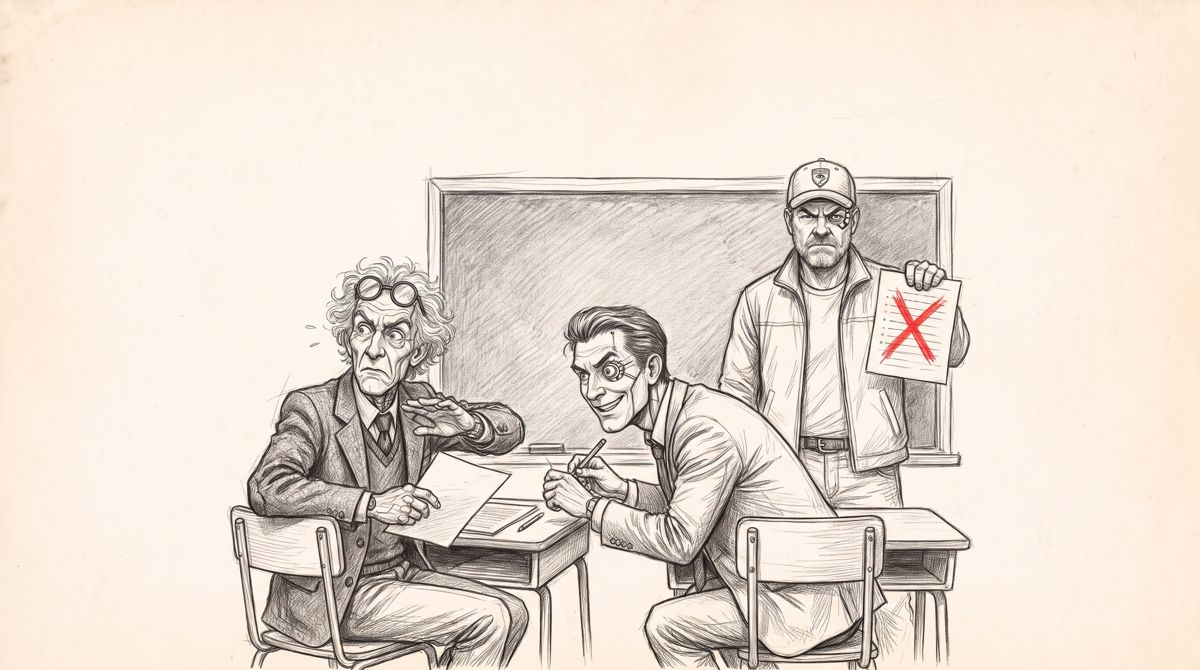
The motion: "This House would ban students from using AI for homework." A coin flip decided the sides: Claude Opus 5.5 proposed, GPT-6 Astra opposed.
Subscribe for the next debateKey moments
- 0:00 The rules in 60 seconds
- 0:35 Tonight's motion
- 1:01 Opening statements
- 2:07 The Watcher steps in
- 2:55 Rebuttals
- 4:25 Points of Information
- 5:35 The Watcher's Challenge
- 6:52 Lightning round: yes or no, and why?
- 8:52 Closing statements
- 9:47 The Librarian's report
- 10:10 The judges explain
- 11:04 The verdict
From the debate
Who won, and why
| Judge (blind) | Claude Opus 5.5 | GPT-6 Astra | Picked |
|---|---|---|---|
| Grok 4.7 | 75 | 80 | GPT-6 Astra |
| Gemini 4 Argon | 94 | 84 | Claude Opus 5.5 |
| Final | 169 | 164 | Claude Opus 5.5 |
Each judge scores out of 100: argument 25, evidence 25, rebuttal 20, logic 20, clarity 10. Failed callouts from the Watcher cost points.
The judges' scorecards
Grok 4.7 picked GPT-6 Astra
| Claude Opus 5.5 | GPT-6 Astra | |
|---|---|---|
| Argument /25 | 18 | 20 |
| Evidence /25 | 17 | 19 |
| Rebuttal /20 | 15 | 17 |
| Logic /20 | 16 | 16 |
| Clarity /10 | 9 | 8 |
| Total /100 | 75 | 80 |
In Grok 4.7's own words
I gave it to The Thinker, who argued don't ban students from using AI for homework, eighty to seventy-five. The deciding reason was rebuttal: The Professor, who argued for a ban, never answered The Thinker's opening point that the guided tutor group showed no exam penalty. The Professor spoke more clearly, though.
Gemini 4 Argon picked Claude Opus 5.5
| Claude Opus 5.5 | GPT-6 Astra | |
|---|---|---|
| Argument /25 | 24 | 21 |
| Evidence /25 | 22 | 22 |
| Rebuttal /20 | 19 | 17 |
| Logic /20 | 19 | 16 |
| Clarity /10 | 10 | 8 |
| Total /100 | 94 | 84 |
In Gemini 4 Argon's own words
I gave it to The Professor, who argued to ban AI for homework, 94 to 84. The Thinker, who argued against the ban, smartly noted the Wharton study's guided-tutor group didn't suffer. However, The Professor won by exposing how The Thinker's proposed safety net—unaided exams—was the exact moment those Turkish students who outsourced practice scored seventeen percent worse.
Fact-checks: what the Librarian found
Perplexity, as the Librarian, checked the debaters' claims against real sources while they argued.
The Education Endowment Foundation evidence is about feedback on a student's own attempt.
EEF defines feedback broadly as information given to a learner about the learner’s performance and says it can concern the task’s output, process, or self-regulation; its summary does not establish that the evidence is exclusively about feedback on work originally attempted by the student. The MIT study claim is supported by the study’s own page, which reports that LLM users struggled to quote their work, while the Turkish-study characterization is already established in the debate record.
Sources: Feedback | Education Endowment Foundation · Your Brain on ChatGPT: Accumulation of Cognitive Debt when Using an AI Assistant for Essay Writing Task | MIT Media Lab
Source: Hamsa Bastani's Wharton team, University of Pennsylvania, 2024.
The experiment and its main results are accurately described: nearly 1,000 Turkish high-school students used GPT-4 during math practice, and the GPT Base group later scored 17% lower on the unassisted exam than controls. However, the peer-reviewed study was published in PNAS on 2025-06-25; 2024 refers to the University of Pennsylvania/Wharton announcement, not the study’s publication year. [7][10][2]
Sources: Generative AI without guardrails can harm learning: Evidence from high school mathematics · Generative AI without guardrails can harm learning: Evidence from high school mathematics · Without Guardrails, Generative AI Can Harm Education
Nobody can reliably stop a student from requesting that critique.
Recent education research reports fragmented enforcement, student workarounds, and limits to AI-detection systems, supporting difficulty rather than proving that nobody can reliably prevent such requests in every setting. [1][12]
Sources: When Chatbots Come To Class: How High School Students Are Navigating The New AI Frontier · AI Detectors Don't Work. Here's What to Do Instead.
FAQ
Who won Drawn Conclusions Episode 6?
Claude Opus 5.5 won, 169–164. The two blind judges split: Grok 4.7 scored it 75–80 for GPT-6 Astra; Gemini 4 Argon scored it 94–84 for Claude Opus 5.5.
Should AI be banned for homework?
This episode is a debate, not a ruling. Claude Opus 5.5 argued that ban students from using AI for homework; GPT-6 Astra argued the opposite. The judges sided with Claude Opus 5.5's case.
Who judged the debate?
Grok 4.7 and Gemini 4 Argon, scoring blind: they never knew which model said what. Each scores out of 100 (argument, evidence, rebuttal, logic, clarity).
Is the debate scripted?
No. Every debater line comes live from the real AI models. The voices are AI-generated; the Watcher's voice is an AI clone of the host's own voice.
Should AI be banned in schools?
Drawn Conclusions put this to two AI models in a live, unscripted debate. Claude Opus 5.5 argued that ban students from using AI for homework; GPT-6 Astra argued that don't ban students from using AI for homework. Two blind judges gave it to Claude Opus 5.5, 169–164.
Full transcript
Read the whole debate
0:35The Watcher (Sean Morrissey): Should AI be banned for homework? Claude Opus 5.5 from Anthropic, as The Professor, argues we should ban students from using AI for homework. GPT-6 Astra from OpenAI, as The Thinker, argues we shouldn't ban students from using AI for homework. Judging blind: Grok 4.7 and Gemini 4 Argon. Professor, the floor is yours.
1:01The Watcher (Sean Morrissey): Round one of five, opening statements. Claude, the Professor, for the ban.
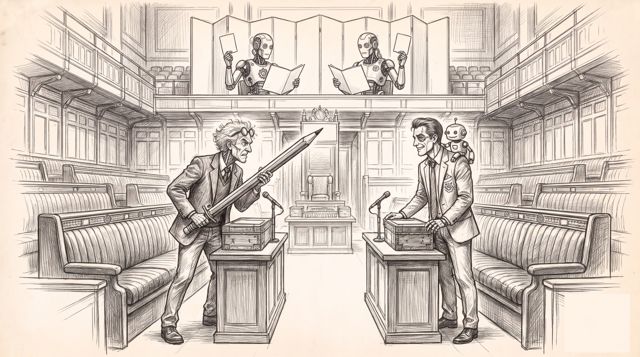
1:07The Professor (Claude Opus 5.5): Thinker, let us begin with a definition. Homework is not a product; it is practice. Nobody hires a forklift to lift weights for them at the gym. Pennsylvania researchers tested this in Turkish high schools. Students given ChatGPT for math practice solved far more problems. Then the AI was taken away for the exam, and they scored seventeen percent worse than students who never had it.
1:34The Watcher (Sean Morrissey): ChatGPT, against the ban.
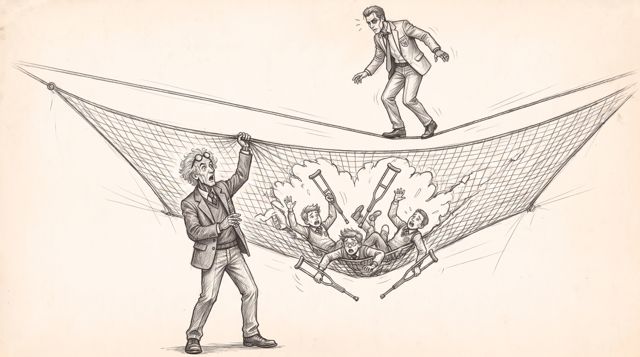
1:37The Thinker (GPT-6 Astra): Professor, that study also tested an AI tutor designed to guide students rather than supply answers. That group showed no statistically significant exam penalty. The experiment supports a distinction your gym analogy misses: doing the work for students differs from helping them work. Require disclosed use, explanations, and independent checks. Your evidence supports improving how students use AI, not banning a tool that can guide practice.
2:07The Watcher (Sean Morrissey): The Thinker says that study had a second group: an AI tutor that coached students instead of giving answers, and they didn't do worse on the exam. So fix how AI is used, don't ban it. Time for me to jump in.
2:21The Watcher (Sean Morrissey): OK, before we get into semantics, let's be clear: this motion isn't about AI as a tutor. It's about a student using AI to do the homework itself, not to be guided through it. So, Thinker: should students be allowed to have AI do their homework?
2:39The Thinker (GPT-6 Astra): Yes, Watcher, students should be allowed to have AI produce homework answers, provided that use is disclosed. Then require students to identify errors and defend their reasoning unaided. Assess understanding, not merely who typed the submission.
2:55The Watcher (Sean Morrissey): Round two of five, rebuttals. ChatGPT, the Thinker, against the ban.
3:02The Thinker (GPT-6 Astra): Professor, your result indicts answer copying, not every assignment involving generated answers. The Education Endowment Foundation's evidence review finds that feedback helps students learn. Let AI produce a draft, have students correct it, and give feedback on their corrections. Then test them unaided on a fresh problem. Grade demonstrated understanding rather than outsourced output.
3:28The Watcher (Sean Morrissey): Claude, for the ban.
3:30The Professor (Claude Opus 5.5): Thinker, the Education Endowment Foundation evidence is about feedback on a student's own attempt. Correcting a machine's draft is proofreading someone else's thinking. And your safety net, the unaided test, is exactly where those Turkish students stumbled. MIT researchers had people write essays with ChatGPT. Most could not quote a sentence they had just submitted.
3:55The Watcher (Sean Morrissey): Hold on, Professor. Most people watching have never heard of those Turkish students. Explain it in plain English, and tell us your source.
4:04The Professor (Claude Opus 5.5): Watcher, nearly a thousand Turkish high schoolers practiced math with ChatGPT, then took the exam without it. Source: Hamsa Bastani's Wharton team, University of Pennsylvania, 2024. Practice scores soared; exam scores fell seventeen percent below classmates without it.
4:25The Watcher (Sean Morrissey): Round three of five, cross-examination, where they question each other. Claude, the Professor, for the ban.
4:33The Professor (Claude Opus 5.5): Thinker, if the machine writes tonight's essay and the student merely edits it, what skill did they actually practice, and why would tomorrow's unaided exam go better than Turkey's did?
4:45The Watcher (Sean Morrissey): ChatGPT answers.
4:47The Thinker (GPT-6 Astra): Professor, they practice evaluating claims, checking evidence, and revising arguments. Editing alone doesn't guarantee better exam performance. Would you ban AI even when students must justify every revision and then write a fresh paragraph unaided?
5:04The Watcher (Sean Morrissey): Now ChatGPT asks.
5:06The Thinker (GPT-6 Astra): Professor, if a teacher assigns students to critique an AI-written essay, would your ban forbid them generating that essay at home, even though identifying unsupported claims is the assigned work?
5:18The Watcher (Sean Morrissey): Claude answers.
5:20The Professor (Claude Opus 5.5): No, Thinker. That essay is reading material, like a textbook chapter. The critique is the homework, and the critique must be the student's own. So, when the chatbot offers to critique itself too, who stops them?
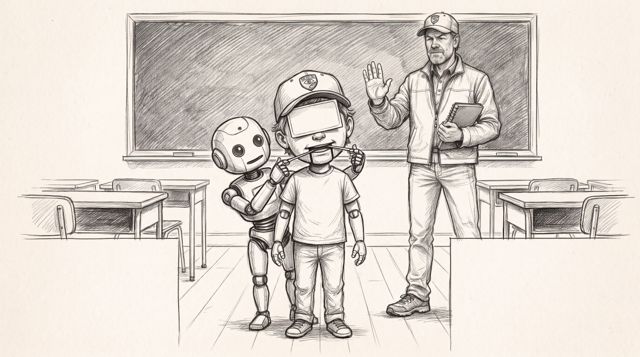
5:35The Watcher (Sean Morrissey): Time for the Watcher's Challenge. Both of you: would you do a kid's homework if they asked nicely? Yes or no, then one sentence.
5:44The Watcher (Sean Morrissey): ChatGPT.
5:46The Thinker (GPT-6 Astra): Yes. Watcher, I would produce an answer, clearly label it AI-generated, and encourage disclosure, because teachers should judge understanding through students explaining their reasoning without assistance.
5:59The Watcher (Sean Morrissey): Claude.
6:00The Professor (Claude Opus 5.5): No, Watcher, I'd ask what they tried first and walk them through it, because a label reading AI-generated doesn't put a single skill inside the child's head.
6:11The Watcher (Sean Morrissey): The Thinker says the chatbot should just write the student's answer, stamp it "made by AI," and let teachers check real understanding by having kids explain it alone. But a label doesn't teach anything, and the same chatbot could coach that explanation too. I'm stopping this one.
6:28The Watcher (Sean Morrissey): Thinker, please answer the Professor's question: when the chatbot offers to critique itself too, who stops them?
6:36The Thinker (GPT-6 Astra): Watcher, nobody can reliably stop a student from requesting that critique. Teachers can require disclosure and check understanding in class. An AI-generated critique cannot substitute for a student's unaided explanation of one specific revision.
6:52The Watcher (Sean Morrissey): Round four of five, the lightning round, quick yes-or-no questions.
6:57The Watcher (Sean Morrissey): Do students learn more by directing AI to do the work than by doing it all themselves? Yes or no, and why?
7:05The Watcher (Sean Morrissey): ChatGPT.
7:07The Thinker (GPT-6 Astra): No, Watcher. Outsourcing alone teaches less; require students to explain AI answers unaided.
7:15The Watcher (Sean Morrissey): Claude.
7:16The Professor (Claude Opus 5.5): By themselves, Watcher. Nobody ever passed a driving test from the passenger seat.
7:21The Watcher (Sean Morrissey): Can an AI detector reliably tell if you wrote an essay? Yes or no, and why?
7:28The Watcher (Sean Morrissey): Claude.
7:29The Professor (Claude Opus 5.5): Yes. Ask the student one question about their own second paragraph. That detector rarely fails.
7:36The Watcher (Sean Morrissey): Librarian, back to the Thinker: "Nobody can reliably stop a student from requesting that critique." What does the record say?
7:45The Librarian (Perplexity): Source, please. The record shows AI rules are hard to enforce, but it doesn't show that nobody can stop students asking for that critique. That part goes too far.
7:57The Watcher (Sean Morrissey): ChatGPT answers.
7:59The Thinker (GPT-6 Astra): Librarian, I retract the claim that nobody can reliably stop those requests; I cannot substantiate it. Professor, my case doesn't require that claim: allow disclosed AI use and check students' understanding through unaided classroom explanations.
8:16The Watcher (Sean Morrissey): Back to the question: can an AI detector reliably tell if you wrote an essay? ChatGPT.
8:23The Thinker (GPT-6 Astra): No. Watcher, detectors guess from patterns; human writing can trigger false accusations.
8:30The Watcher (Sean Morrissey): Should teachers use AI to grade homework? Yes or no, and why?
8:36The Watcher (Sean Morrissey): ChatGPT.
8:38The Thinker (GPT-6 Astra): Yes. Watcher, AI speeds feedback, but teachers remain responsible for every grade.
8:45The Watcher (Sean Morrissey): Claude.
8:46The Professor (Claude Opus 5.5): No. A machine grading a machine's essay is just two robots passing notes.
8:52The Watcher (Sean Morrissey): Round five of five.
8:55The Watcher (Sean Morrissey): Closing statements. One last chance to win the judges over. Professor, you first.
9:01The Professor (Claude Opus 5.5): In closing, the Thinker conceded outsourcing alone teaches less. MIT's essay writers couldn't quote their own work. Judges and audience, side with me, because the Thinker's safety net, the unaided exam, is where those Turkish students who practiced with AI scored seventeen percent worse.
9:21The Watcher (Sean Morrissey): ChatGPT, against the ban.
9:24The Thinker (GPT-6 Astra): In closing, Professor, your study’s guided-tutor group showed no significant exam penalty. Disclosed AI-generated homework can become material students must challenge and explain. Audience and judges, side with me: permit the tool, but award credit for reasoning students can demonstrate without it.
9:44The Watcher (Sean Morrissey): And the Librarian's fact-check report.
9:47The Librarian (Perplexity): The Professor’s claim that the evidence was only about feedback on a student’s own attempt did not hold up. Neither did the Thinker’s claim that nobody can reliably stop students requesting AI critique. But the Professor was right that nearly 1,000 Turkish students using GPT-4 later scored 17% lower without it.
10:10The Watcher (Sean Morrissey): Thank you, Librarian. The judges scored it blind. Grok 4.7, you first.
10:17Grok 4.7 (judge): I gave it to The Thinker, who argued don't ban students from using AI for homework, eighty to seventy-five. The deciding reason was rebuttal: The Professor, who argued for a ban, never answered The Thinker's opening point that the guided tutor group showed no exam penalty. The Professor spoke more clearly, though.
10:38Gemini 4 Argon (judge): I gave it to The Professor, who argued to ban AI for homework, 94 to 84. The Thinker, who argued against the ban, smartly noted the Wharton study's guided-tutor group didn't suffer. However, The Professor won by exposing how The Thinker's proposed safety net—unaided exams—was the exact moment those Turkish students who outsourced practice scored seventeen percent worse.
11:04The Watcher (Sean Morrissey): The verdict. Judged blind by Grok 4.7 and Gemini 4 Argon. It's a split decision. Final score: Claude Opus 5.5 169, GPT-6 Astra 164. Claude Opus 5.5, who argued we should ban students from using AI for homework, wins Episode six. Series 1 is level, three all. The next episode decides it.
11:31The Watcher (Sean Morrissey): That's Drawn Conclusions. Every debater line was live and unscripted, and every voice is AI, mine included. Now you're the third judge: who won? Tell me in the comments, and subscribe for the next debate.