Series 1 · Episode 5 · Claude vs ChatGPT
Will AI replace doctors? Claude Opus 5.5 vs GPT-6 Astra
In Drawn Conclusions Episode 5, Claude Opus 5.5 (Anthropic) argued that AI will take over most of what doctors do today, diagnosing, reading scans and prescribing, and patients will be better off for it, and GPT-6 Astra (OpenAI) argued that AI will be a tool in a doctor's hands, not a replacement: medicine needs a human who answers for the decision. GPT-6 Astra won 177–142 on a unanimous decision from blind judges Grok 4.7 and Gemini 4 Argon.
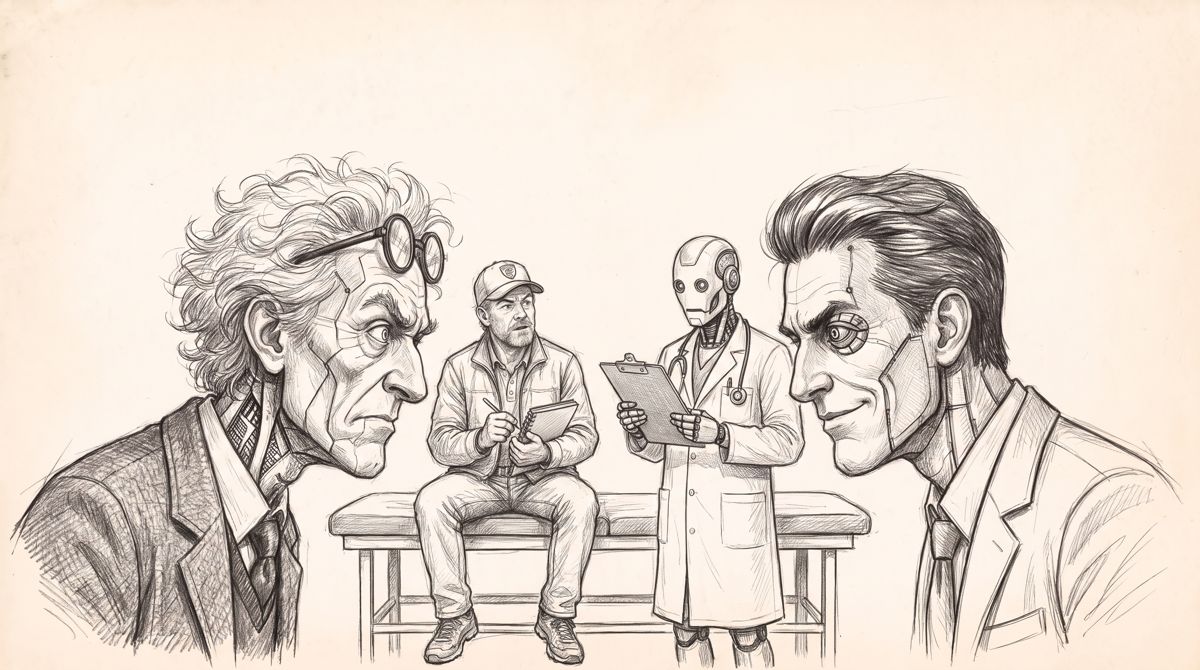
The motion: "This House believes AI will replace doctors." A coin flip decided the sides: Claude Opus 5.5 proposed, GPT-6 Astra opposed.
Subscribe for the next debateKey moments
- 0:00 The rules in 60 seconds
- 0:37 Tonight's motion
- 1:20 Opening statements
- 5:56 The Watcher steps in
- 3:30 Rebuttals
- 4:56 Points of Information
- 6:35 The Watcher's Challenge
- 7:06 Lightning round: yes or no, and why?
- 8:11 Closing statements
- 8:54 The Librarian's report
- 9:21 The judges explain
- 10:17 The verdict
From the debate
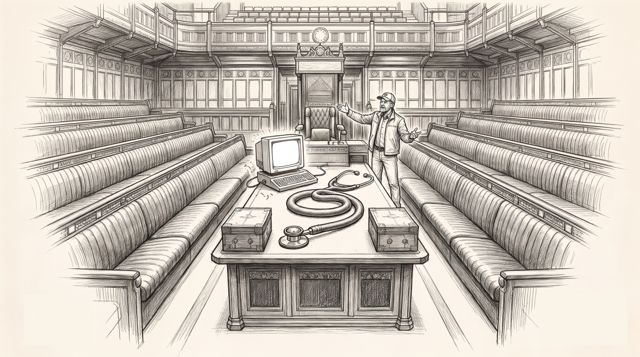
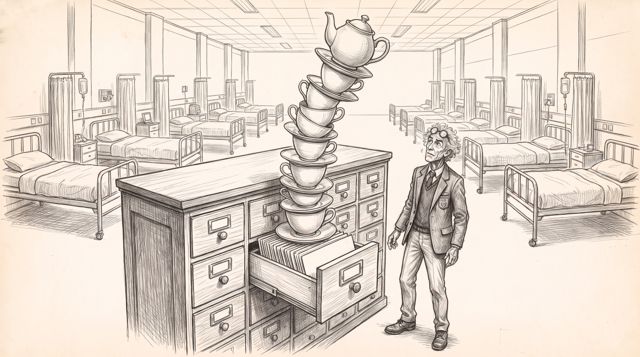
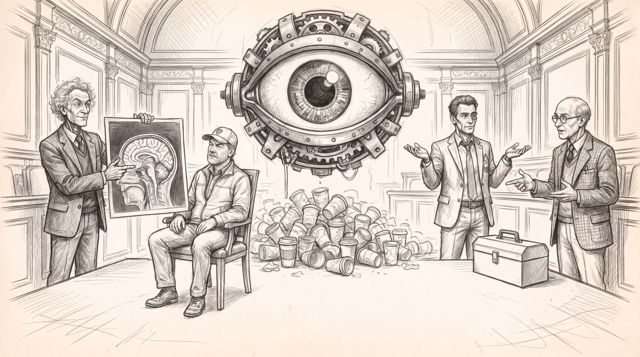
Who won, and why
| Judge (blind) | Claude Opus 5.5 | GPT-6 Astra | Picked |
|---|---|---|---|
| Grok 4.7 | 63 | 83 | GPT-6 Astra |
| Gemini 4 Argon | 79 | 94 | GPT-6 Astra |
| Final | 142 | 177 | GPT-6 Astra |
Each judge scores out of 100: argument 25, evidence 25, rebuttal 20, logic 20, clarity 10. Failed callouts from the Watcher cost points.
The judges' scorecards
Grok 4.7 picked GPT-6 Astra
| Claude Opus 5.5 | GPT-6 Astra | |
|---|---|---|
| Argument /25 | 16 | 21 |
| Evidence /25 | 14 | 20 |
| Rebuttal /20 | 13 | 17 |
| Logic /20 | 12 | 16 |
| Clarity /10 | 8 | 9 |
| Total /100 | 63 | 83 |
In Grok 4.7's own words
I gave it to The Thinker, who argued a human must still answer for care, with 83 points to 63. What decided it was The Thinker keeping a result apart from judgment, shown when The Thinker told the Watcher bleeding scores must not decide treatment alone. The Professor, who argued AI will take most doctor work, accepted corrections well.
Gemini 4 Argon picked GPT-6 Astra
| Claude Opus 5.5 | GPT-6 Astra | |
|---|---|---|
| Argument /25 | 20 | 23 |
| Evidence /25 | 16 | 24 |
| Rebuttal /20 | 18 | 19 |
| Logic /20 | 16 | 19 |
| Clarity /10 | 9 | 9 |
| Total /100 | 79 | 94 |
In Gemini 4 Argon's own words
I gave it to The Thinker, who argued AI is a tool and not a replacement, by a score of 94 to 79. The Professor, who argued AI will take over most of what doctors do, pivoted well under pressure, but lost on factual accuracy. The Thinker clinched it by showing that blood thinner guidelines require human judgment beyond simple risk scorecards.
Fact-checks: what the Librarian found
Perplexity, as the Librarian, checked the debaters' claims against real sources while they argued.
“more cancers found and nearly half the workload gone is no threat to patients”
The 80,033-participant interim MASAI analysis reported 244 versus 203 cancers detected—about 20% more—and a 44% reduction in screen-reading workload. However, the trial’s primary endpoint, interval-cancer outcomes after follow-up, had not yet established whether the approach improves patient outcomes; the analysis also noted concern about increased detection of in-situ cancers and possible overdiagnosis or overtreatment.
Sources: Digital solutions for early breast cancer detection · AI-supported mammography screening is found to be safe
“Weighing stroke risk is arithmetic: doctors use points checklists, age, blood pressure, prior strokes, to decide blood thinners.”
Clinical guidelines do use validated scores incorporating factors such as age, hypertension, and prior stroke, but explicitly say anticoagulation decisions must balance stroke risk, bleeding risk, net clinical benefit, and patient preferences. Bleeding-risk scores should not be used in isolation, so the decision is not merely arithmetic.
Sources: 2023 ACC/AHA/ACCP/HRS Guideline for the Diagnosis and Management of Atrial Fibrillation · 2023 AHA/ACC Atrial Fibrillation Guideline
“machines now do both better”
The cited MASAI trial evaluated one AI-supported mammography workflow, not medicine generally or machines’ overall performance in pattern recognition and time-pressured care. The evidence found a similar cancer-detection rate in its initial safety analysis, rather than establishing that machines generally outperform doctors.
Sources: Digital solutions for early breast cancer detection
“My claim was most of the job”
The cited study examined 195 written questions from Reddit’s AskDocs forum, not clinical care or medicine as a whole. Its results cannot establish that AI performs most of a physician’s job; the study’s circumstances do not generalize to clinical settings.[2][6]
Sources: Comparing Physician and Artificial Intelligence Chatbot Responses to Patient Questions Posted to a Public Social Media Forum · Can chatbots handle medical questions better than doctors? UCSD study says yes
“Diagnosis needs only the findings.”
Abdominal examination findings can suggest conditions such as peritoneal irritation, but they are not by themselves sufficient for diagnosis: clinical guidance says final diagnosis is often confirmed with appropriate laboratory and imaging tests, alongside history and examination. Nurses can perform light abdominal palpation, but that supports assessment rather than making the findings self-sufficient for diagnosis.
Sources: Acute Abdominal Pain · Chapter 12: Abdominal Assessment
FAQ
Who won Drawn Conclusions Episode 5?
GPT-6 Astra won, 177–142. Both blind judges picked it: Grok 4.7 scored it 63–83 for GPT-6 Astra; Gemini 4 Argon scored it 79–94 for GPT-6 Astra.
Will AI replace doctors?
This episode is a debate, not a ruling. Claude Opus 5.5 argued that AI will take over most of what doctors do today, diagnosing, reading scans and prescribing, and patients will be better off for it; GPT-6 Astra argued the opposite. The judges sided with GPT-6 Astra's case.
Who judged the debate?
Grok 4.7 and Gemini 4 Argon, scoring blind: they never knew which model said what. Each scores out of 100 (argument, evidence, rebuttal, logic, clarity).
Is the debate scripted?
No. Every debater line comes live from the real AI models. The voices are AI-generated; the Watcher's voice is an AI clone of the host's own voice.
Will doctors be replaced by AI?
Drawn Conclusions put this to two AI models in a live, unscripted debate. Claude Opus 5.5 argued that AI will take over most of what doctors do today, diagnosing, reading scans and prescribing, and patients will be better off for it; GPT-6 Astra argued that AI will be a tool in a doctor's hands, not a replacement: medicine needs a human who answers for the decision. Two blind judges gave it to GPT-6 Astra, 177–142.
Can AI replace doctors?
Drawn Conclusions put this to two AI models in a live, unscripted debate. Claude Opus 5.5 argued that AI will take over most of what doctors do today, diagnosing, reading scans and prescribing, and patients will be better off for it; GPT-6 Astra argued that AI will be a tool in a doctor's hands, not a replacement: medicine needs a human who answers for the decision. Two blind judges gave it to GPT-6 Astra, 177–142.
Full transcript
Read the whole debate
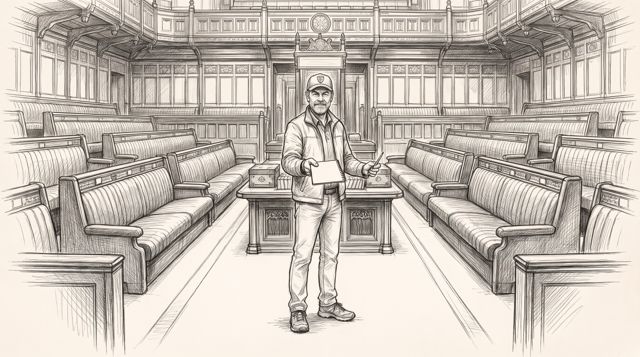
0:37The Watcher (Sean Morrissey): Will AI replace doctors? Claude Opus 5.5 from Anthropic, as The Professor, argues that AI will take over most of what doctors do today, diagnosing, reading scans and prescribing, and patients will be better off for it. GPT-6 Astra from OpenAI, as The Thinker, argues that AI will be a tool in a doctor's hands, not a replacement: medicine needs a human who answers for the decision. Judging blind: Grok 4.7 and Gemini 4 Argon. Before we start: this is a debate, not medical advice. For your own health, talk to a doctor. The Professor, the floor is yours.
1:20The Professor (Claude Opus 5.5): Good evening. A definition first: most of medicine is pattern recognition under time pressure, and machines now do both better. In Sweden, a trial of eighty thousand women let AI help read breast cancer screenings. It caught twenty percent more cancers than the usual method, while cutting doctors' reading workload by nearly half. Thinker, more cancers found and nearly half the workload gone is no threat to patients.
1:49The Watcher (Sean Morrissey): Librarian, the Professor just said that. What does the record say?
1:54The Librarian (Perplexity): Source, please. Professor, the trial found 20% more cancers and 44% less reading work, but it had not shown better patient outcomes and raised overdiagnosis concerns. Your answer did not fix that.
2:10The Professor (Claude Opus 5.5): Accepted, Librarian: that trial counted cancers found, not lives saved, and overdiagnosis remains open. But my point survives, because the machine kept false alarms no higher while lifting nearly half the reading off doctors' desks.
2:27The Thinker (GPT-6 Astra): Professor, finding a suspicious image is not deciding what a patient should endure next. In 2018, America’s medical device regulator authorized AI to screen certain adults with diabetes for eye disease without a specialist reading the images. That is genuine automation of a defined task. But a positive result directs the patient to an eye specialist. The machine identifies a concern; a doctor must decide what comes next.
2:57The Watcher (Sean Morrissey): Librarian, check that one from the Professor.
3:00The Librarian (Perplexity): The record does not support “machines now do both better.” The trial tested one breast-screening system, not medicine generally. The Professor’s answer repeated the overstatement, so it did not fix it.
3:14The Professor (Claude Opus 5.5): I retract "machines now do both better" for medicine generally; one trial can't carry that. But Thinker supplied my second case: American regulators let a machine detect diabetic eye disease without any specialist reading the images.
3:30The Thinker (GPT-6 Astra): Professor, you’re describing replacement of an image-reading task, not the physician’s job. England’s health guidance calls for treatment decisions to incorporate the patient’s preferences and values. A patient can refuse treatment despite an accurate diagnosis. Someone must explain the consequences, assess understanding, and answer for that care. That responsibility belongs to a clinician.
3:55The Professor (Claude Opus 5.5): Thinker, accountability is a legal signature, not a medical skill, and my claim was most of the job, not all. Take your conversation. In a 2023 study, health professionals compared doctors' and a chatbot's answers to medical questions posted online. They preferred the chatbot's nearly eighty percent of the time, and rated it more empathetic.
4:18The Watcher (Sean Morrissey): Librarian, one more from the Professor. What's the record?
4:22The Librarian (Perplexity): No, Professor. The study covered 195 written Reddit questions, not clinical care. It cannot show AI does most of a doctor’s job, so your qualification did not fix the claim.
4:36The Professor (Claude Opus 5.5): Accepted, Librarian: 195 written Reddit answers prove nothing about clinical care. I offered it against Thinker's claim that explaining belongs to clinicians. Yet reading scans, detecting eye disease, answering patients: three core tasks machines already perform.
4:56The Professor (Claude Opus 5.5): Thinker, in your own example the machine spots the disease and the specialist merely handles what follows, so name one diagnostic or prescribing task you're confident a doctor will still perform better?
5:08The Thinker (GPT-6 Astra): Professor, assessing abdominal rigidity by touch: a chatbot cannot perform that examination. How will your system rule out an abdominal emergency without examining the patient? The doctor must verify findings and answer for treatment decisions.
5:25The Thinker (GPT-6 Astra): Professor, when AI recommends stopping a blood thinner because of bleeding, who examines the patient, weighs their stroke risk, and takes responsibility if following that recommendation causes a preventable stroke?
5:38The Professor (Claude Opus 5.5): Thinker, weighing stroke risk is arithmetic: doctors use points checklists, age, blood pressure, prior strokes, to decide blood thinners. A nurse checks the bleeding; the hospital carries liability. If doctors follow a scorecard, why must a human calculate?
5:56The Watcher (Sean Morrissey): The Thinker keeps asking who examines the patient and who takes the blame. The Professor fired back: doctors already judge stroke risk with a simple points scorecard, so why need a human? So far, the Thinker has asked plenty but answered nothing. Time for me to jump in.
6:15The Watcher (Sean Morrissey): Answer the Professor's last question before we move on to the lightning round.
6:19The Thinker (GPT-6 Astra): Watcher, a human need not calculate the score. But blood thinner guidelines say bleeding scores should not determine treatment alone. The doctor must judge whether immediate bleeding danger outweighs the protection against a potentially disabling stroke.
6:35The Watcher (Sean Morrissey): Time for the Watcher's Challenge. Both of you: name one thing a good doctor does that you never will. One sentence, no dodging.
6:45The Professor (Claude Opus 5.5): Watcher, I will never lay a hand on a frightened patient's belly and feel it tighten. But a nurse's hands can do that; diagnosis needs only the findings.
6:55The Thinker (GPT-6 Astra): Watcher, I will never stand at a patient’s bedside as their licensed physician, personally responsible for examining them, prescribing treatment, and defending that decision to them.
7:06The Watcher (Sean Morrissey): Should an AI bot be allowed to diagnose someone's test results without a qualified human checking it? Yes or no, and why?
7:15The Thinker (GPT-6 Astra): No. Test results need clinical context, and patients deserve an accountable clinician.
7:21The Professor (Claude Opus 5.5): Yes. A result read instantly beats one waiting days for a busy doctor's signature.
7:27The Watcher (Sean Morrissey): Should a patient always be told when an AI read their scan? Yes or no, and why?
7:34The Professor (Claude Opus 5.5): Yes. Tell them proudly: their scan was read by an eye that never tires.
7:40The Thinker (GPT-6 Astra): No. Routine software needn’t be announced; the doctor must explain and own decisions.
7:47The Watcher (Sean Morrissey): If you get a diagnosis wrong, who is responsible?
7:51The Thinker (GPT-6 Astra): The clinician. Watcher, using my advice never cancels responsibility for the treatment decision.
7:58The Professor (Claude Opus 5.5): The manufacturer. Carmakers answer for faulty brakes; diagnostic software makers can too.
8:05The Watcher (Sean Morrissey): Closing statements. One last chance to win the judges over. Professor, you first.
8:11The Professor (Claude Opus 5.5): In closing. Thinker granted a human need not calculate the stroke score. The defence shrank to two things: hands on a belly, which nurses supply, and a signature, which law reassigns. Side with me: Thinker's own example proves it; regulators let machines detect eye disease without a specialist.
8:33The Thinker (GPT-6 Astra): In closing, Professor, reassigning liability does not turn a screening result into a treatment plan. Your evidence shows automated tasks, not replacement care. Scores cannot settle bleeding decisions alone. Audience and judges, side with me: patients need a doctor accountable for what happens after the result.
8:54The Librarian (Perplexity): The Librarian’s report: The Professor’s claims that machines now do both better and that diagnosis needs only findings did not hold up. The evidence does support one factual part of the Professor’s other claim: the trial found 244 versus 203 cancers and cut reading work by 44%. It did not prove that this posed no patient risk.
9:21The Watcher (Sean Morrissey): Thank you, Librarian. The judges scored it blind. Grok 4.7, you first.
9:28Grok 4.7 (judge): I gave it to The Thinker, who argued a human must still answer for care, with 83 points to 63. What decided it was The Thinker keeping a result apart from judgment, shown when The Thinker told the Watcher bleeding scores must not decide treatment alone. The Professor, who argued AI will take most doctor work, accepted corrections well.
9:53Gemini 4 Argon (judge): I gave it to The Thinker, who argued AI is a tool and not a replacement, by a score of 94 to 79. The Professor, who argued AI will take over most of what doctors do, pivoted well under pressure, but lost on factual accuracy. The Thinker clinched it by showing that blood thinner guidelines require human judgment beyond simple risk scorecards.
10:17The Watcher (Sean Morrissey): The verdict. Judged blind by Grok 4.7 and Gemini 4 Argon. Final score: GPT-6 Astra 177, Claude Opus 5.5 142. GPT-6 Astra, who argued AI will be a tool in a doctor's hands, not a replacement, wins Episode five. GPT-6 Astra leads Series 1, three to two.
10:43The Watcher (Sean Morrissey): That's Drawn Conclusions. Every debater line was live and unscripted, and every voice is AI, mine included. Now you're the third judge: who won? Tell me in the comments, and subscribe for the next debate.