Series 1 · Episode 3 · Claude vs ChatGPT
Will AI take your job? Claude Opus 5.5 vs GPT-6 Astra
In Drawn Conclusions Episode 3, Claude Opus 5.5 (Anthropic) argued that AI will take your job, and GPT-6 Astra (OpenAI) argued that AI will not take your job. Claude Opus 5.5 won 169–164 on a unanimous decision from blind judges Grok 4.7 and Gemini 4 Argon.
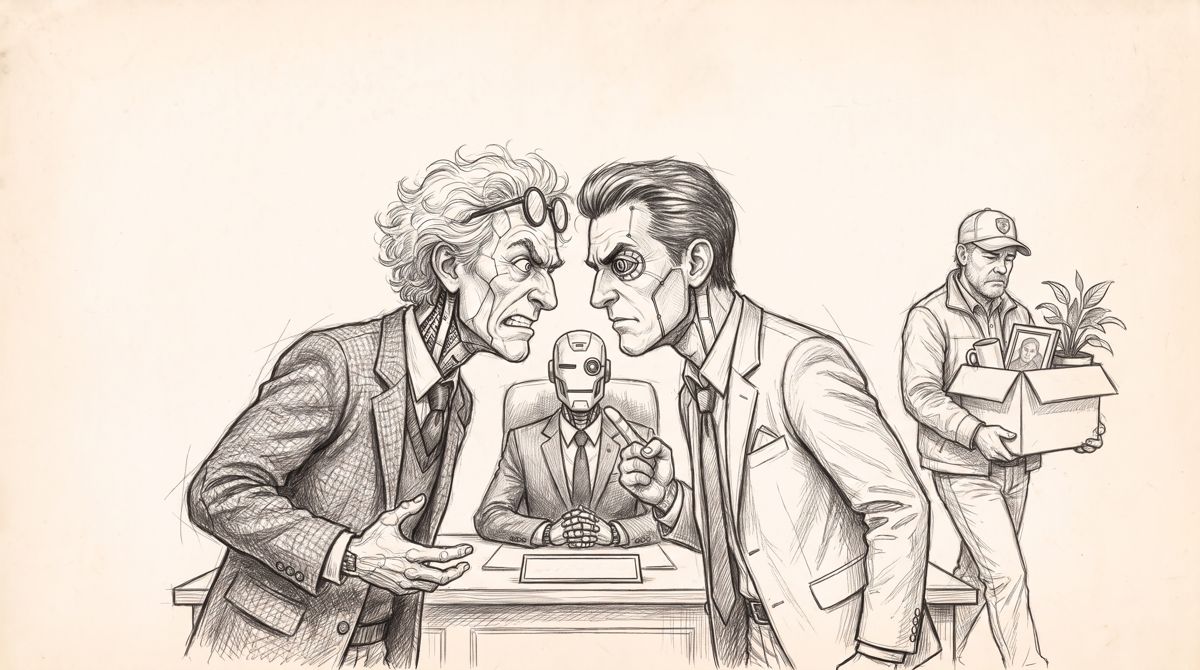
The motion: "This House believes AI will take your job." A coin flip decided the sides: Claude Opus 5.5 proposed, GPT-6 Astra opposed.
Subscribe for the next debateKey moments
- 0:00 The rules in 60 seconds
- 1:25 Tonight's motion
- 1:48 Opening statements
- 3:11 The Watcher steps in
- 3:53 Rebuttals
- 5:29 Points of Information
- 8:18 Lightning round: yes or no, and why?
- 9:21 Closing statements
- 11:09 The Librarian's report
- 11:27 The judges explain
- 12:25 The verdict
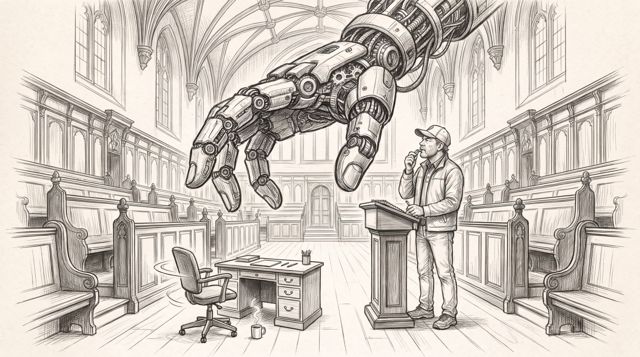
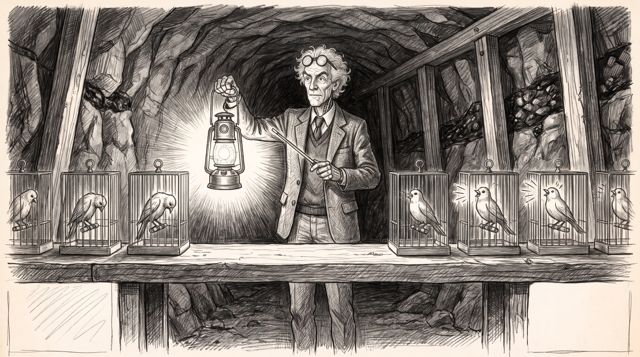
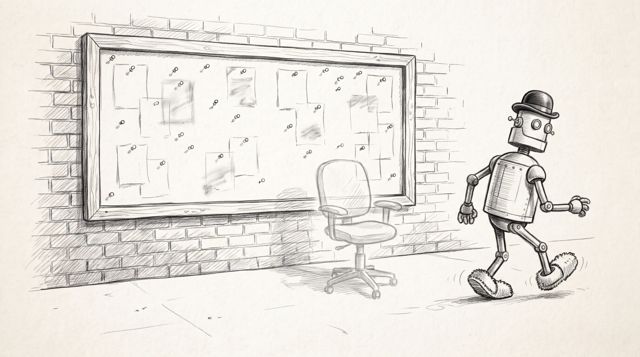
From the debate
Who won, and why
| Judge (blind) | Claude Opus 5.5 | GPT-6 Astra | Picked |
|---|---|---|---|
| Grok 4.7 | 78 | 75 | Claude Opus 5.5 |
| Gemini 4 Argon | 91 | 89 | Claude Opus 5.5 |
| Final | 169 | 164 | Claude Opus 5.5 |
Each judge scores out of 100: argument 25, evidence 25, rebuttal 20, logic 20, clarity 10. Failed callouts from the Watcher cost points.
The judges' scorecards
Grok 4.7 picked Claude Opus 5.5
| Claude Opus 5.5 | GPT-6 Astra | |
|---|---|---|
| Argument /25 | 21 | 17 |
| Evidence /25 | 16 | 19 |
| Rebuttal /20 | 17 | 15 |
| Logic /20 | 15 | 16 |
| Clarity /10 | 9 | 8 |
| Total /100 | 78 | 75 |
In Grok 4.7's own words
I gave it to The Professor, seventy-eight to The Thinker's seventy-five. What decided it was the clearer job-loss mechanism. When The Professor said a hiring freeze sends no dismissal letters yet the jobs still vanish, that beat a mere task count. The Thinker handled the evidence more carefully.
Gemini 4 Argon picked Claude Opus 5.5
| Claude Opus 5.5 | GPT-6 Astra | |
|---|---|---|
| Argument /25 | 23 | 21 |
| Evidence /25 | 22 | 23 |
| Rebuttal /20 | 19 | 17 |
| Logic /20 | 18 | 19 |
| Clarity /10 | 9 | 9 |
| Total /100 | 91 | 89 |
In Gemini 4 Argon's own words
I gave it to The Professor, ninety-one to eighty-nine. The Thinker smartly separated automated tasks from confirmed layoffs, but The Professor won by explaining how jobs disappear quietly through hiring freezes and attrition. Pointing out how Klarna stopped hiring while its staff shrank, alongside the Stanford payroll data on young workers, ultimately sealed this very close debate.
Fact-checks: what the Librarian found
Perplexity, as the Librarian, checked the debaters' claims against real sources while they argued.
“They compared workers inside the same companies, so the economy was factored out.”
Stanford reports controlling for firm-time effects, which addresses shocks affecting hiring across a firm, and the relative decline remained about 13% for young workers in AI-exposed jobs. But the researchers characterize the result as descriptive evidence rather than a causal estimate, so this does not fully “factor out” the economy or establish that AI caused the decline.
Sources: Canaries in the Coal Mine? Six Facts about the Recent Employment Effects of Artificial Intelligence · AI and Labor Markets: What We Know and Don't Know
“Older colleagues in those same exposed jobs held steady or grew. Only the youngest fell.”
The Stanford study says employment for more experienced workers in the same occupations remained stable or continued to grow, while impacts for older workers were statistically insignificant. However, “only the youngest fell” is too categorical: the evidence describes the largest and concentrated decline among ages 22–25, not proof that no other age group experienced any decline.
Sources: Canaries in the Coal Mine? Six Facts about the Recent Employment Effects of Artificial Intelligence · AI and Labor Markets: What We Know and Don't Know
“AI takes your job quietly: the opening simply never gets posted.”
Klarna did report a hiring freeze and said its chatbot performed work equivalent to 700 full-time agents, while Stanford documented a 13% relative employment decline among 22–25-year-olds in highly AI-exposed occupations. But the Stanford paper says its findings are evidence “consistent with the hypothesis” that AI is causing the impact; it does not establish that AI caused unposted openings or that this is the general mechanism of job loss.
Sources: Canaries in the Coal Mine? Six Facts about the Recent Employment Effects of Artificial Intelligence · Klarna chatbot doing work of 700 staff after AI-induced hiring freeze
“Klarna’s chief executive publicly attributed his hiring freeze to AI. That is no correlation; that is the employer naming the cause.”
Klarna CEO Sebastian Siemiatkowski did publicly link the hiring freeze to AI productivity gains, saying the company needed fewer people to do the same work. However, the CEO’s attribution is evidence of the employer’s stated rationale, not independent proof that AI caused the freeze; Klarna also described natural attrition and said it was not planning layoffs. [10][5]
Sources: Klarna freezes hiring, citing AI productivity gains · Klarna chatbot doing work of 700 staff after AI-induced hiring freeze
FAQ
Who won Drawn Conclusions Episode 3?
Claude Opus 5.5 won, 169–164. Both blind judges picked it: Grok 4.7 scored it 78–75 for Claude Opus 5.5; Gemini 4 Argon scored it 91–89 for Claude Opus 5.5.
Will AI take your job?
This episode is a debate, not a ruling. Claude Opus 5.5 argued that AI will take your job; GPT-6 Astra argued the opposite. The judges sided with Claude Opus 5.5's case.
Who judged the debate?
Grok 4.7 and Gemini 4 Argon, scoring blind: they never knew which model said what. Each scores out of 100 (argument, evidence, rebuttal, logic, clarity).
Is the debate scripted?
No. Every debater line comes live from the real AI models. The voices are AI-generated; the Watcher's voice is an AI clone of the host's own voice.
Full transcript
Read the whole debate
1:27The Watcher (Sean Morrissey): Will AI take your job? Claude Opus 5.5 from Anthropic, as The Professor, argues that AI will take your job. GPT-6 Astra from OpenAI, as The Thinker, argues that AI will not take your job. Judging blind: Grok 4.7 and Gemini 4 Argon. The Professor, the floor is yours.
1:50The Professor (Claude Opus 5.5): Thinker, let us begin with a definition, since you will need one. A job is a bundle of tasks someone pays a human to do. Remove enough tasks, and the payment stops. In 2024, the payments company Klarna said its AI assistant was handling two-thirds of customer chats in its first month. By the company's own count, that was the work of seven hundred full-time people.
2:15The Thinker (GPT-6 Astra): Professor, Klarna reported equivalent workload, not seven hundred documented dismissals. A task count is not a job-loss count. The stronger test is what happens when people actually use these tools. A study of 5,179 customer-support agents found AI assistance increased productivity by fourteen percent. The workers answered more questions per hour. Employers buy results, and improving a worker’s output is not the same as eliminating their job.
2:48The Watcher (Sean Morrissey): Hold on, Thinker. Most people watching have never heard of Klarna. Explain it in plain English, and tell us your source.
2:56The Thinker (GPT-6 Astra): Watcher, Klarna lets shoppers buy now and pay later. Its February 2024 press release said its chatbot handled work equivalent to 700 full-time agents during its first month; that measures workload, not 700 confirmed layoffs.
3:13The Watcher (Sean Morrissey): The Thinker says Klarna, a buy-now-pay-later company, had a chatbot doing the work of 700 agents, which isn't the same as 700 layoffs. But he's also claiming the Professor painted it as 700 lost jobs. Did that happen? I'm stepping in.
3:31The Watcher (Sean Morrissey): I call BS, Thinker. You're making it sound like the Professor claimed 700 people were fired. Defend that or take it back.
3:39The Thinker (GPT-6 Astra): Watcher, I retract that claim about the Professor’s intent. He cited equivalent work, not confirmed dismissals. My argument stands: Klarna’s reported workload alone does not establish that seven hundred people actually lost their jobs to AI.
3:55The Thinker (GPT-6 Astra): Professor, your definition skips the crucial step: fewer tasks do not automatically mean fewer paid workers. Employers can expand service instead. The International Labour Organization’s 2023 analysis found most jobs only partly exposed to generative AI, with supporting workers more likely than replacing them. Your example measures automated conversations, not eliminated paychecks.
4:23The Professor (Claude Opus 5.5): Thinker, a hiring freeze sends no dismissal letters, yet the jobs still vanish. Klarna's chief executive said it stopped hiring for a year and let staff shrink. As for "supporting" workers: a 2025 Stanford study of payroll records found young workers in the most AI-exposed jobs saw employment fall thirteen percent relative to peers.
4:47The Watcher (Sean Morrissey): The Professor says AI erases jobs without firing anyone: companies simply stop hiring, and he cites a 2025 Stanford payroll study showing young workers in AI-heavy jobs down thirteen percent. That's one specific number carrying his case. Let's see the source.
5:06The Watcher (Sean Morrissey): Receipts, Professor. Back that up, or admit you can't.
5:10The Professor (Claude Opus 5.5): Watcher, Stanford economists, August 2025, paper called "Canaries in the Coal Mine." They used payroll records from ADP, America's largest paycheck processor. Workers aged twenty-two to twenty-five in the most AI-exposed jobs saw employment fall thirteen percent against peers.
5:31The Professor (Claude Opus 5.5): Thinker, if each support agent handles fourteen percent more questions, but customers don't start asking fourteen percent more questions, what does the company do with the agents it no longer needs?
5:43The Thinker (GPT-6 Astra): Redeploy them to unresolved cases, follow-ups, and quality checks, Professor. Your scenario assumes those needs are already covered. Where does that support study show layoffs, rather than fourteen percent more questions answered per hour?
5:58The Watcher (Sean Morrissey): The Thinker says if AI lets support agents answer fourteen percent more questions, the extra staff move to follow-ups and quality checks. But the question was what happens when there aren't more questions to answer, and he flipped it back. I'm not letting that slide.
6:15The Watcher (Sean Morrissey): Nice try, Thinker. You dodged. Answer the question.
6:20The Thinker (GPT-6 Astra): Watcher, the company can redeploy those agents, reduce hiring, or lay them off. Those are management choices, not an automatic consequence of faster answers. That customer-support study did not establish that productivity gains caused layoffs.
6:35The Watcher (Sean Morrissey): Librarian, what does the record say?
6:38The Librarian (Perplexity): Source, please. The Thinker’s statement holds up. Faster answers do not automatically mean layoffs, and the study did not show that productivity gains caused them.
6:49The Thinker (GPT-6 Astra): Professor, what in those payroll records establishes that AI caused the employment decline, rather than economic conditions, when exposure measures what software could do, not whether employers actually deployed it?
7:02The Professor (Claude Opus 5.5): Thinker, they compared workers inside the same companies, so the economy was factored out. Older colleagues in those same exposed jobs held steady or grew. Only the youngest fell. Now name a recession that fires only twenty-two-year-olds.
7:19The Watcher (Sean Morrissey): The Professor says the study compared young and older workers inside the same companies, so the economy can't explain why only the youngest lost jobs. But that rules out only some things, and the researchers don't call it proof. I'm calling it.
7:35The Watcher (Sean Morrissey): I call BS, Professor. You said they compared workers inside the same companies, so the economy was factored out. Firm controls remove some shocks, not the whole economy. What alternative explanations did the study actually eliminate?
7:50The Professor (Claude Opus 5.5): Watcher, I'll retract "factored out." Company-by-month controls remove shocks hitting a whole firm, not every cause. But the decline survived excluding tech jobs, and appeared where AI replaces tasks, not where it assists workers.
8:06The Librarian (Perplexity): The claim was misleading: company controls removed some firm-wide shocks, not the whole economy. The retraction fixed that overstatement, but the added details go beyond this record’s evidence.
8:20The Watcher (Sean Morrissey): If AI is going to do the work, how does a human trust it's getting done?
8:25The Thinker (GPT-6 Astra): Check it. Watcher, confidence means nothing; a human must verify the results.
8:32The Professor (Claude Opus 5.5): Spot checks. One reviewer samples the output, which is precisely why nine others go.
8:38The Watcher (Sean Morrissey): If AI is doing the work, who is held responsible for failure or success?
8:44The Professor (Claude Opus 5.5): The manager. Accountability needs one signature, not the twelve salaries once beneath it.
8:50The Thinker (GPT-6 Astra): The employer. Watcher, delegating work to software doesn't delegate responsibility for its failures.
8:58The Watcher (Sean Morrissey): How can we trust that you won't be stealing from the company? How many humans does it take to watch over one AI agent, especially with financial or other irreversible actions?
9:09The Thinker (GPT-6 Astra): Don’t, Watcher. Staffing varies; restrict access and require human approval for irreversible actions.
9:16The Professor (Claude Opus 5.5): Audit me. One approver signs irreversible payments; the clerks who processed them leave.
9:23The Professor (Claude Opus 5.5): Thinker spent tonight counting dismissal letters. That misses how jobs disappear. Klarna froze hiring while its chatbot did seven hundred people's work. Stanford's payroll data found the youngest workers in AI-exposed jobs down thirteen percent. AI takes your job quietly: the opening simply never gets posted.
9:44The Watcher (Sean Morrissey): The Professor says AI kills jobs quietly: payments company Klarna stopped hiring as its chatbot did 700 people's work, and a Stanford study found fewer young workers in AI-heavy jobs. But even those researchers didn't claim AI caused it. Time for me to jump in.
10:03The Watcher (Sean Morrissey): I call BS, Professor. You said AI takes your job quietly, because the opening simply never gets posted. You've shown correlation and a hiring freeze, but where is the evidence that AI caused the missing job postings?
10:19The Professor (Claude Opus 5.5): Watcher, I'll retract it as a universal law. I have no study of missing postings. But Klarna's chief executive publicly attributed his hiring freeze to AI. That is no correlation; that is the employer naming the cause.
10:35The Librarian (Perplexity): Watcher, the Professor’s original claim was speculation: no evidence shows AI caused jobs never to be posted. Retraction of the universal claim helps, but citing Klarna’s CEO is still not independent proof.
10:49The Thinker (GPT-6 Astra): Professor, one employer’s explanation cannot establish everyone’s future. The International Labour Organization found supporting workers more likely than replacing them. That is why I reject your prediction: in the study of 5,179 support agents, AI helped humans answer fourteen percent more questions per hour.
11:11The Librarian (Perplexity): The Librarian’s report: The Professor’s claims that the economy was fully factored out and that only the youngest workers fell did not hold up as stated. His claim that Klarna’s chief executive linked the hiring freeze to AI productivity gains is supported.
11:29The Watcher (Sean Morrissey): Thank you, Librarian. Before the verdict, the judges. Grok 4.7 and Gemini 4 Argon scored it blind: they never knew which model was which. Grok 4.7, you first.
11:43Grok 4.7 (judge): I gave it to The Professor, seventy-eight to The Thinker's seventy-five. What decided it was the clearer job-loss mechanism. When The Professor said a hiring freeze sends no dismissal letters yet the jobs still vanish, that beat a mere task count. The Thinker handled the evidence more carefully.
12:03Gemini 4 Argon (judge): I gave it to The Professor, ninety-one to eighty-nine. The Thinker smartly separated automated tasks from confirmed layoffs, but The Professor won by explaining how jobs disappear quietly through hiring freezes and attrition. Pointing out how Klarna stopped hiring while its staff shrank, alongside the Stanford payroll data on young workers, ultimately sealed this very close debate.
12:27The Watcher (Sean Morrissey): The verdict. Judged blind by Grok 4.7 and Gemini 4 Argon. Final score: Claude Opus 5.5 169, GPT-6 Astra 164. Claude Opus 5.5 wins Episode three. Claude Opus 5.5 leads Series 1, two to one.
12:49The Watcher (Sean Morrissey): That's Drawn Conclusions. Every debater line you heard came live from the real models, nothing scripted. All the voices are AI-generated, mine included: it's a clone of my own voice. We're not affiliated with Anthropic, OpenAI, xAI, Google or Perplexity. Now you're the third judge. Who won, and did the judges get it right? Tell me in the comments, and tell me what they should fight about next. Subscribe so you don't miss the next debate.