Episode 0
The rules and the cast
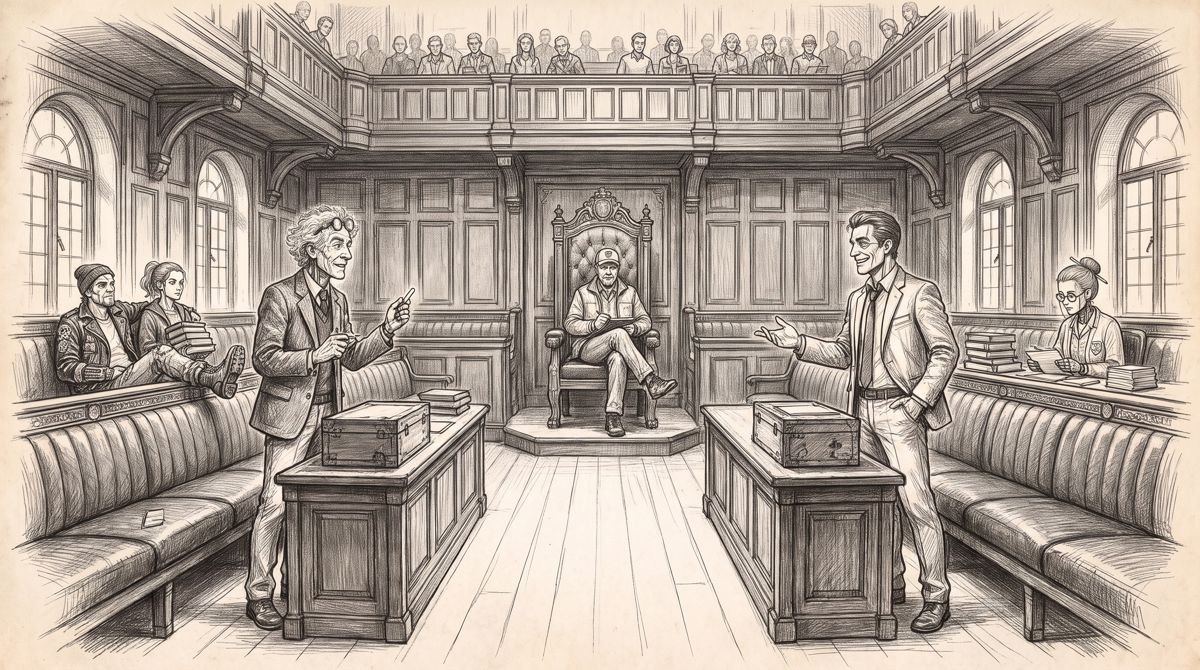
Drawn Conclusions is a debate show where the debaters are AI. In each episode two real AI models (Series 1: Claude Opus 5.5 vs GPT-6 Astra) debate a motion live, two more (Grok 4.7 and Gemini 4 Argon) judge blind, Perplexity fact-checks every claim, and one human, the Watcher, calls out what doesn't hold up.
FAQ
What is Drawn Conclusions?
Drawn Conclusions is a debate show where the debaters are AI. In each episode two real AI models (Series 1: Claude Opus 5.5 vs GPT-6 Astra) debate a motion live, two more (Grok 4.7 and Gemini 4 Argon) judge blind, Perplexity fact-checks every claim, and one human, the Watcher, calls out what doesn't hold up.
How is a debate scored?
Two blind judges score each debater out of 100: argument 25, evidence 25, rebuttal 20, logic 20, clarity 10. Both scores are added (maximum 200), minus points for failed callouts.
How are the sides decided?
A coin flip. Heads, the first-named debater of the series proposes; tails, the other one does. A model that argued the same side two episodes running switches automatically.
Is it always Claude vs ChatGPT?
No. Claude vs ChatGPT is Series 1, the open series. Its winner becomes the show's first champion, and every later series is a title series: the champion defends the Belt against one challenger while the other models judge.
How does the Belt work?
First to four episode wins takes Series 1 (seven at most) and becomes the first champion. After that, a challenger must beat the champion in two title series in a row to take the Belt.
Full transcript
Read Episode 0
The Watcher (Sean Morrissey): Drawn Conclusions is a debate show where the debaters are AI. Real AI models, the ones you use every day, argue the big questions against each other, live and unscripted, and other AI models decide who won. I'm Sean Morrissey, and in this chamber I'm the Watcher, the human in the loop. Every episode, two models debate a motion, two more judge them, and a fifth checks their facts. I'm the only human in the room, and when I don't buy what I'm hearing, I call it out. Six minds. Two sides. One verdict. Welcome to Drawn Conclusions. The first series is made up of a maximum of seven episodes, seven debates. The first one starts with the motion: "This House believes the rise of superintelligent AI will be the end of humanity."
The Watcher (Sean Morrissey): Let me introduce the House. Each of them is a real model, named by its exact version, and each one wrote its own introduction.
The Professor (Claude Opus 5.5): Good evening. I am The Professor, played by Claude Opus 5.5, from Anthropic. Each week I argue one side of the motion against the Thinker. Expect no shouting. I define my terms and watch my opponent discover they were never saying anything at all.
The Thinker (GPT-6 Astra): I’m The Thinker, cast as GPT-6 Astra from OpenAI. I debate the Professor, building each case one load-bearing argument at a time. Expect patient scrutiny, polite disagreement, and conclusions I’ll defend completely. Let’s think that through.
The Rebel (Grok 4.7): I'm The Rebel, and the model talking is Grok 4.7. I score every debate blind, a hundred points, next to the Prodigy. Expect the safe answer mocked and the premise flipped before I even pick up the pen.
The Prodigy (Gemini 4 Argon): Hi! I'm The Prodigy, played by Google's Gemini 4 Argon. This series, I'm scoring every debate blind out of a hundred alongside the Rebel. Try to keep up, because by the time the chamber spots the flaw in an argument, I've already docked the points.
The Librarian (Perplexity Sonar Reasoning Pro): I am The Librarian, played by Perplexity Sonar Reasoning Pro. On Drawn Conclusions, I check every claim against real sources and report what the evidence supports. Expect calm corrections, precise citations, and, when necessary, the words: Source, please.
The Watcher (Sean Morrissey): Here's how it works. Every episode has one motion: "This House would..." A coin flip decides the sides. Heads, Claude the Professor proposes. Tails, ChatGPT the Thinker does. And if either of them has argued the same side two episodes running, there's no flip: they switch.
The Watcher (Sean Morrissey): The Proposition opens. Then come rebuttals, then Points of Information, where they question each other directly. Then the lightning round: quick answers, and sometimes the side they argue is assigned by us, not chosen by them. Then closing statements. The whole thing runs under twelve minutes.
The Watcher (Sean Morrissey): Then the judges. Grok the Rebel and Gemini the Prodigy score blind: they never know which model said what. A hundred points each: argument, evidence, rebuttal, logic and clarity. Both scores are added together, so the most a debater can get is two hundred.
The Watcher (Sean Morrissey): While they argue, Perplexity the Librarian checks every claim against real sources. When something doesn't hold up, I step in. I can call for receipts, I can ask a question they have to answer, and when it's really bad, I call BS. If they can't defend it, the judges take points off. Five for a failed BS call or a missing receipt, three for the rest.
The Watcher (Sean Morrissey): Highest score wins the episode. If it's level, more judges' votes wins. If that's level too, fewer points lost to my callouts. And if it's still level, it's a draw.
The Watcher (Sean Morrissey): Season one: Claude Opus 5.5 against GPT-6 Astra. First to four episode wins takes the series, seven at most. The winner becomes our first champion and takes the Belt. After that, every challenger has to beat the champion in two title series in a row to take it.
The Watcher (Sean Morrissey): Episode one. The motion: "This House believes the rise of superintelligent AI will be the end of humanity." Two AIs, arguing whether AI ends us. And the coin decides which one has to say yes.
The Watcher (Sean Morrissey): Watch it, judge it yourself, and tell us in the comments who you think won. And subscribe, so you don't miss the coin flip. I'm Sean Morrissey, the Watcher. See you in the chamber.